John 6:29

They [the Jews] said therefore to [Jesus], “What shall we do, that we may work the works of God?” Jesus answered and said to them, “This is the work of God, that you believe in Him whom He sent.”
Question: Do you suppose that the Jews got the answer that they were looking for?
Answer: Not at all. They were accustomed to a work of the Mosaic Law.
John Calvin: “First, it is clear enough that Christ is not speaking literally when he calls faith a ‘work,’ in the same way that Paul compares the law of faith with the law of works (see Romans 3:27).” (John Calvin: The Crossway Classic Commentaries, p.156, emphasis mine)
I completely agree. Jesus is not talking about the works of the Law. Jesus is refocusing them on the kind of work that God now demands of them, which is merely the work of their ancestor Abraham.
The thing about John 6:29 is that the Jews were specifically asking for a work to perform, and Jesus told them that if they are seeking to do a work, then do the works of faith by believing in Him. So this was something that Jesus was encouraging them to do, and was speaking in the language of terms that they identified with. So if calling upon the name of the Lord in faith is a work, it was a work that Jesus is encouraging, rather than discouraging. Nowhere else did Jesus push the idea that faith is a work. I think that Jesus was just speaking in the language that they understood. In other words, ‘You want to do works?, then do this work.’ I think that that’s the gist of it. Everything that Paul stated about works (i.e. the works of the Law) still applies. So I think that the context of the statement is key here.
Question: Did Jesus say that faith is a “work”?
Answer: The Jews instinctively sought to establish
their own righteousness through the Law, and so
when they asked for a “work” that they may do in
order to vindicate their own righteousness, Jesus
pointed them back toward the direction of their
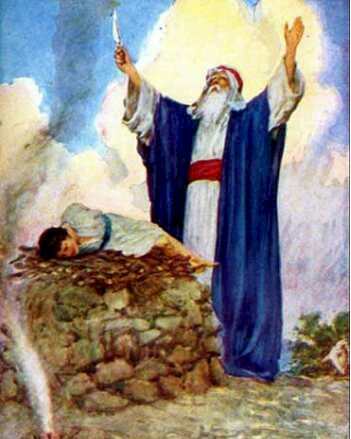
ancestor, Abraham, who believed God, and
righteousness was imputed to him: “Then he
believed in the LORD; and He reckoned it to
him as righteousness.” (Genesis 15:6) James
2:23 adds: “...and he was called the friend of
God.”
The Jews: What shall we do to work the “works of God”?
Jesus: Believe in Him whom the Father has sent.
Romans 4:5: “But to the one who does not work, but believes in Him who justifies the ungodly, his faith is credited as righteousness.”
Galatians 2:16: “Knowing that a man is not justified by the works of the Law but through faith in Christ Jesus, even we have believed in Christ Jesus, so that we may be justified by faith in Christ and not by the works of the Law; since by the works of the Law no flesh will be justified.”
Question: Did Jesus, at John 6:29, and the apostle Paul, at Romans 4:5 and Galatians 2:16, have the same exact type of “work” in mind?
Answer: No, because Paul was speaking specifically of the works of the Law, while Jesus was speaking of faith, and thus, both messages line up perfectly in agreement.
One person comments: “I got the implication that they mean that God’s work is to give them saving faith.”
However, John Calvin explains:
John Calvin: “They had spoken about ‘works.’ Christ reminds them about one ‘work’--that is, faith, by which he means that everything that men do without faith is in vain and useless. Only faith is enough, because God requires that we ‘believe.’ There is an implied contrast here between ‘faith’ and the ‘works’ and efforts of men. It is as if Christ had said, ‘Men work to no purpose when they try to please God without faith, because they are running off-course and do not go towards the finishing post.’ This is a remarkable passage, since it shows that even if men strain themselves throughout their lives, they achieve nothing if they do not have faith in Christ as the rule of their life. People who infer from this passage that faith is God’s gift are mistaken, for Christ does not show here what God produces in us, but what God wants and requires from us.” (John Calvin: The Crossway Classic Commentaries, pp.155-156, emphasis mine)
Exactly. Jesus is answering their question about what they must do, what God wants from them. This is good because some Calvinists do infer what Calvin describes as “mistaken”:
One Calvinist paraphrase: “They [the Jews] said therefore to [Jesus], ‘What shall we do, that we may work the works of God?’ Jesus answered and said to them, [‘You cannot. God works to put faith in you so that you believe in Him whom He sent’].”
So Calvin correctly points out that this isn’t talking about what God produces in us, but what He expects of us.
Question: Who is doing the work, God or man?
Answer: The two views are between God doing the work vs. man doing the work, and there is no doubt that God works faith in people. However, the implication of the context of John 6:29 is that Jesus is answering their question about what they must do. Consider the broader context. What do Jews do in order to justify themselves before God? What has the Law done to instill a means of justification within them? It is that they must themselves be righteous in order to please God, and so they instinctively requested a work, and instead Jesus handed them the forgotten work of their ancestor Abraham, which was a work in which they could not justify themselves, but must trust in another for justification. That’s precisely why trusting in Christ is a non-meritorious work, for which one has no room to boast before God.
Now a Calvinist might say: “Well, by Arminian logic, you could boast that you choose to trust in the right person, insomuch that you picked the right horse,” but the reality is that you didn’t run the race, nor could you have. Trusting in Jesus is about trusting in a person who ran a race that you did not run, could not run, and would not run, but won anyway, simply because He won for you, when you trust in Him. All that you need to do is trust in Him. That’s how I see this passage. Jesus is correcting their view on works, and pointing them toward the only work that can save, which again, is a non-meritorious work, vs. the meritorious works of the Law, by which no flesh may be saved.